
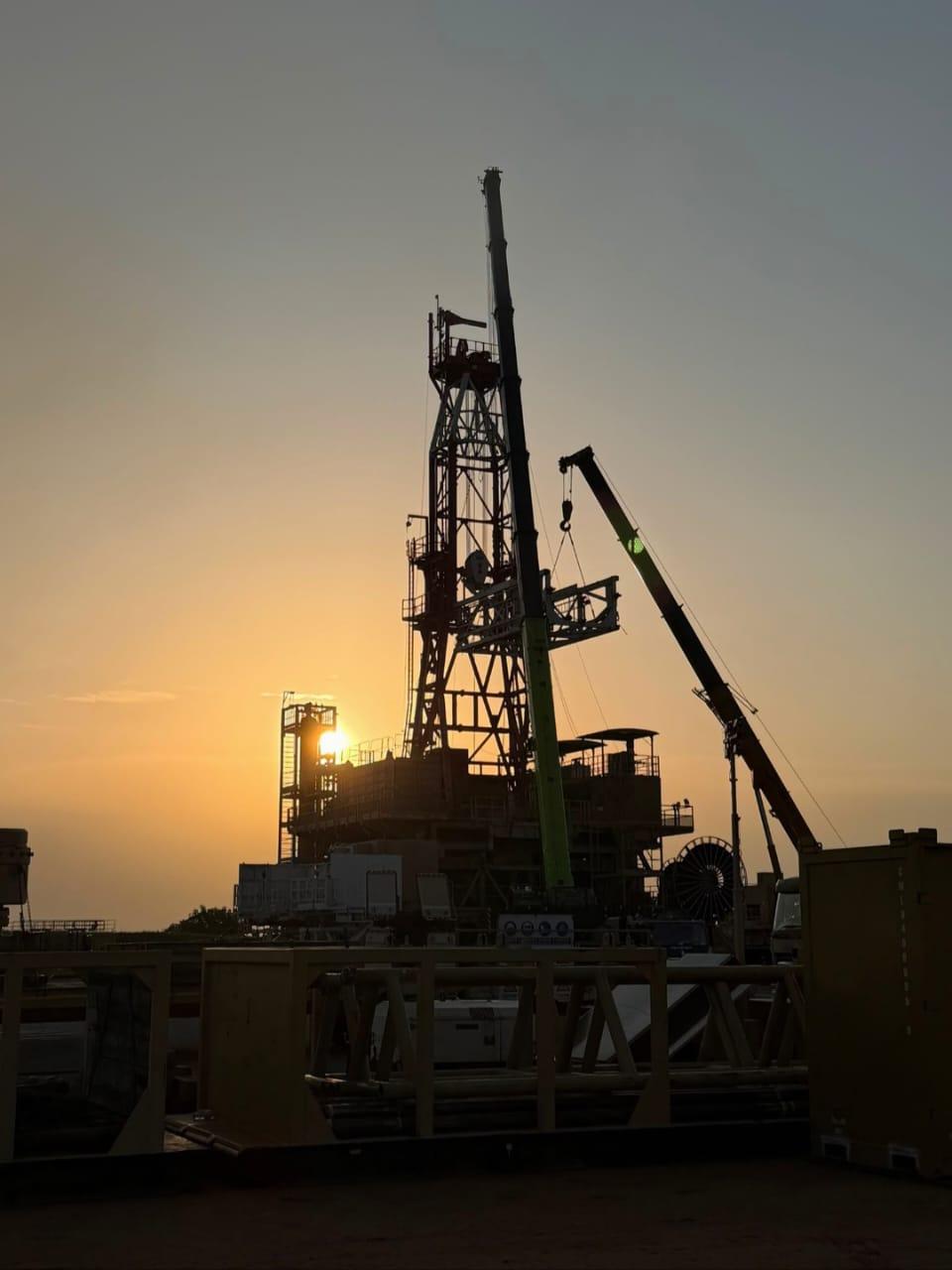
What remained was a camp full of containers, plant, stores and equipment that had to leave in the right order, in one piece, by a fixed date.
Buliisa is a long way from Kampala on roads that change character with the weather, and the material had to move between camps and supply bases rather than along one clean route out. Three things had to hold at once.
The contractor wanted one party responsible from the hook to the deck.
The client's own people were standing down, so the machines had to arrive with competent operators and drivers and not need supervision from a team that was already leaving.
Damage found at the receiving base is expensive and hard to argue about weeks later.
Before anything moved we agreed what was going, what it weighed, what it could be lifted by and where it was going to. That is when we found the loads with no obvious lifting points, and those that had settled into the ground.
Camp hardstanding in the Albertine is often murram, and murram behaves differently in the dry and the wet. Before the crane travelled, we worked out where it could stand, what it could reach from there, and what had to go under the outriggers.
Gate and turning-circle widths, the state of the murram sections, low branches and cables over the track, and where a loaded flatbed can turn round if it has to. We planned the runs around those constraints.
Demobilisation runs to a handover date. We built the movement order backwards from it, so the items that released other work went first and nothing still in use left early.
The daily routine.
Ground made ready, the machine levelled, and the area under and around the load kept clear of anyone not part of the lift. Containers and equipment were slung and landed under a banksman's direction, secured on the deck before the truck moved, and checked again before it left.
Recording what it was and the condition it was in when collected, signed at the receiving end. That sheet settles any question about damage.
Machines were checked before use each day and the checks recorded. Where weather or access stopped a run, we said so and re-planned it.
Competent operators and drivers, ground assessed before every crane set-up, loads secured and checked, a banksman on every lift, and daily pre-use records on machines and vehicles.
Lifting equipment carried its test and examination certificates and its identification and safe working load markings, as the Occupational Safety and Health Act 2006 requires.
So the contractor's HSE team could see them during the work.
The outcome
Four of our services, run as one job.

We will come back with questions first and a quote after them.
Josephine House, 2nd Floor, Kayunga–Bugerere Road, Mukono. P.O. Box 152539, Kampala, Uganda.
Cookie preferences