
No task is so urgent that it has to be done unsafely, and the person who stops it is supported.
Every machine that leaves our yard has a current inspection record and a completed pre-use check.
Every person we send to a site is competent for the work, with the certificate and the licence to prove it, both in date.
At a level of detail that matches the risk.
Every incident and near miss is reported and investigated, including the ones that hurt nobody.
We work to the client's site rules where they are stricter than ours, and to ours where they are not.
We meet the duties the Act places on an employer, including the supply of protective equipment and the keeping of lifting registers.
We meet the environmental duties under the Act, and work inside the conditions of a client's approved assessment on their site.
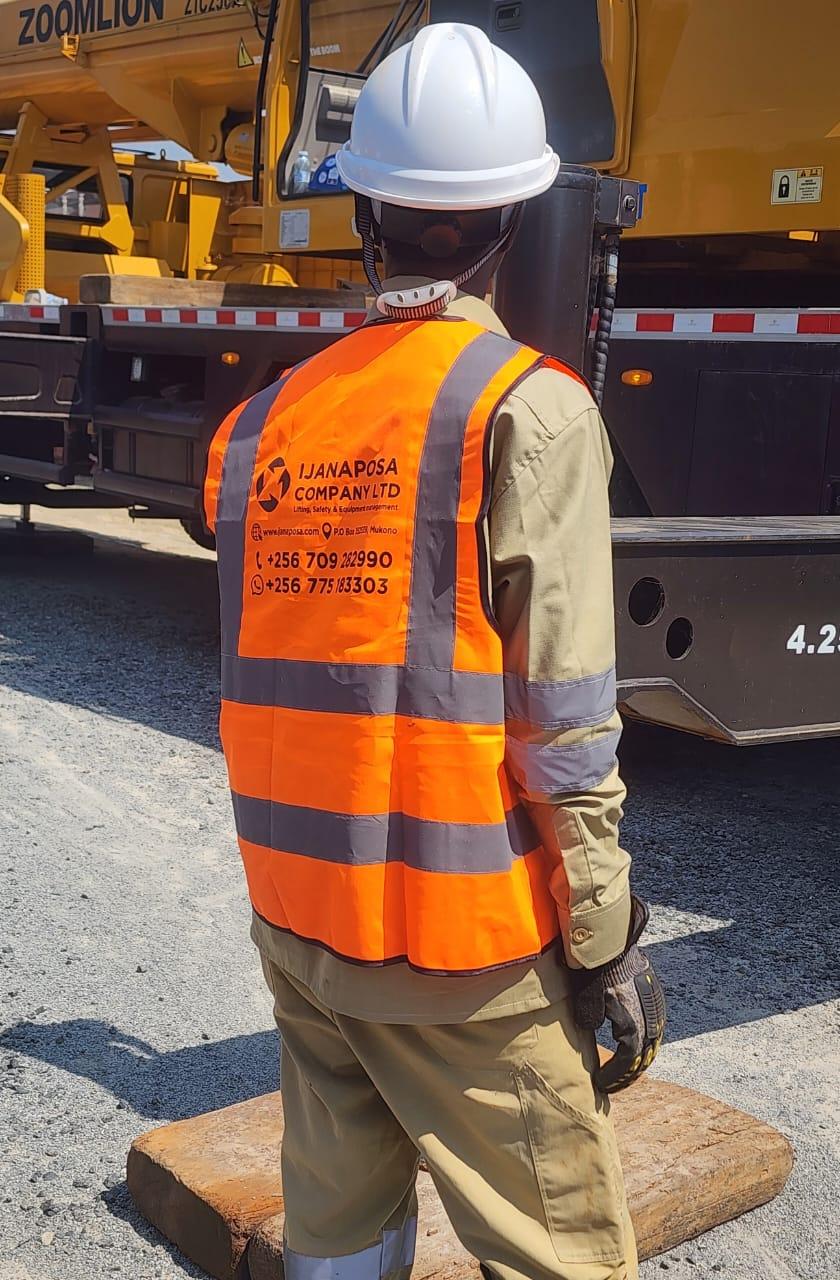
Every unit goes through the same sequence. A machine that fails any step stays in the yard, and we tell you.
A daily check against a sheet written for that class of machine: structure, ropes and slings, hooks and shackles, brakes and limit devices, hydraulics, tyres or tracks, lights, fluid levels and leaks. Signed by the operator or driver.
Anything found goes to the workshop before the machine is released. A defect that affects the safe working load, the brakes or a safety device takes the machine out of service until it is fixed and re-checked.
Test and examination certificates, the current inspection record, insurance, and the operator's certificate and licence go with the machine.
We check that safe working load and identification markings are legible. On a jib crane the radius and load indicator has to be working and visible to the operator.
Section 75 requires a register in the workplace for lifting gear, lifting appliances and lifting machines, in the form set out in Schedule 6.
Section 72(7): a lifting appliance with a safe working load above 150 kg, or a lifting machine, has to be thoroughly examined by an authorised person at intervals not exceeding fourteen months, with the particulars entered in the section 75 register.
Section 71(2): lifting gear used above fifty kilograms has to be tested and examined, with a certificate stating the safe working load kept available for inspection.
Section 71(3): lifting gear other than rope or rope slings is annealed at least once every fourteen months unless exempted.
Section 72(5): every lifting appliance and lifting machine is plainly marked with its safe working load and an identifying number.
Part XI of the Act covers lifting equipment. We keep:
Alongside the statutory register we keep a maintenance log for each asset: service schedule, work carried out, parts fitted, and the hours or kilometres the machine had run at the time. The history follows the machine, so it leaves the workshop with its record updated.
A machine that sat in a yard for a month has not earned a service; one that ran three shifts a day has.
Work done, parts fitted and the readings at the time sit on the asset record, so the next workshop starts from what the last one found.
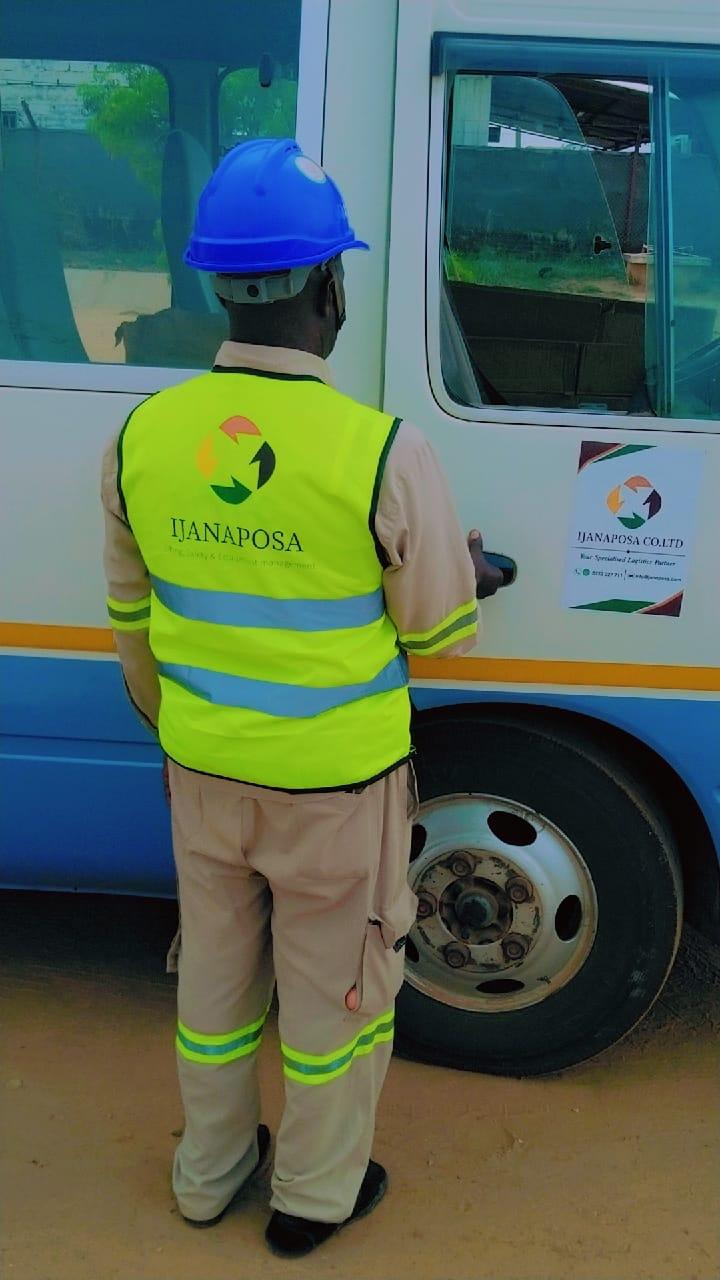
We also show that the person operating the machine is entitled and able to operate it.
The identity document, the driving permit classes their work needs, their operator, rigging, banksman, lift supervision, HSE and first aid certificates, and a record of the equipment they have run. How we vet the people we send out.
We flag each one before it lapses. Someone whose certificate is out of date does not go to site.
New starters and new deployments go through induction before the first shift, and crews take a toolbox talk before work each day. Where the client runs their own induction and permit-to-work system, our people go through it in full.
What happens between the machine arriving and the load being set down.
Every lift is planned to a level that matches its risk, from a simple routine lift assessment up to a written lift plan with load charts, ground bearing calculations, rigging arrangement and exclusion zones, with the task risk assessment and method statement that go with it. A tandem lift, a lift over an occupied area or a lift near live services always gets a written plan.
Checked before a crane is committed. Made-up ground, backfilled trenches, culverts and soft murram after rain cause outrigger failures, so we find them on a site visit.
The area under and around a suspended load is cleared and controlled. Signals are given by one nominated banksman using agreed signals, and the operator takes direction from that person only, except for a stop signal, which anyone may give.
Helmet, high-visibility clothing, safety footwear, gloves and eye protection as standard, with harnesses, hearing protection or respiratory protection where the task or the site requires them. We supply PPE and pay for it, as section 19 of the Act requires.
Any Ijanaposa employee, any person from our personnel network and any client representative can stop a lift or a load movement. Work restarts when the person who stopped it is satisfied, or when the hazard has been dealt with and re-briefed.
We report incidents the same day, investigate the cause, and close each one out with an action. Findings go back to the crews through toolbox talks.
Our environmental footprint is mostly fuel, oil, tyres and the ground we drive and track over.
We handle fuel and oil over drip trays and bunded storage, with spill kits on the machines most likely to leak. A hose failure on a hydraulic crane is the most likely spill on any of our jobs, so that is where the kits go.
Used oil, filters, batteries, tyres and contaminated absorbent go to handlers licensed by the National Environment Management Authority, with the transfer documentation kept. We check every waste handler's NEMA licence.
A badly maintained engine burns more and smokes more. Servicing by hour and kilometre readings also cuts fuel burn and smoke.
Speed limits on murram approach roads, engines off when standing, and night work only where the client has arranged it with the community and the authorities.
Access routes and crane pads agreed with the client before mobilisation, so that machines do not cut new tracks through cultivation or wetland edges.
Where a client's project is operating under an approved environmental and social impact assessment, our work on that site follows the conditions of their approval. Local content, community and the wider picture.
The HSE function does not report to the people carrying the schedule, so a decision to stop work cannot be overruled by whoever is under pressure to finish.
Ijanaposa is a member of the Safety and Health Association of Uganda.
We carry workers' compensation insurance as the Workers' Compensation Act requires.
Public liability and equipment insurance cover our operations. Certificates go to a client's HSE or procurement team on request.
Before a machine of ours goes onto your site, you can ask for any of the following. Asking does not hold up mobilisation.
The specific machine, with the date of the last examination and the next due date.
The slings, shackles, hooks and beams going with the machine, with safe working loads.
The entries for the equipment on your job.
The daily checks for the period the machine is on your site.
Work done on the machine, against hours or kilometres run.
Certificate, issuing body, licence class and expiry dates.
Rigger, banksman, lift supervisor and HSE qualifications for the people on the job.
The specific lift, produced before mobilisation.
Workers' compensation, public liability and equipment cover.
We sell the same HSE services for your own sites and equipment.
Inspection regimes, registers and records for a client's lifting equipment and gear, so an audit does not fail on paperwork.
Site induction, risk assessment, lifting and rigging awareness, and driver training for client crews.
Competent HSE officers and safety supervisors placed on a client's project for the duration of the work.
The quote comes back with what we would put on it and what we can produce for your HSE team before mobilisation.
Josephine House, 2nd Floor, Kayunga–Bugerere Road, Mukono. P.O. Box 152539, Kampala, Uganda.
Cookie preferences